Showing posts with label pesticides. Show all posts
Showing posts with label pesticides. Show all posts
September 16, 2012
Blowing Off Some Steam (B.O.S.S.) 148 - Obama, Pesticides, Insults
**ChangeDaChannel**
@YouTube: http://www.youtube.com/user/ChangeDaChannel
@spywitnessnews.org
@twitter.com/spywitnessnews


November 23, 2011
Monsanto, Bayer and Dow Face Trial For 'Systematic Human Rights Abuses'
*Source: SOTT.net


Permanent Peoples' Tribunal accuses biotech giants Monsanto, Dow, Bayer, Syngenta, DuPont and BASF of promoting dangerous pesticides including endosulfan, paraquat and neonicotinoids
The world's major agrochemical companies, Monsanto, Dow, Bayer, Syngenta, DuPont and BASF, will face a public tribunal in early December accused of systematic human rights violations.
They are accused of violating more than 20 instruments of international human rights law through promoting reliance on the sale and use of dangerous and unsafe pesticides including endosulfan, paraquat and neonicotinoids.
The Permanent Peoples' Tribunal (PPT), an international opinion tribunal created in 1979, will hear expert testimony from scientists, medical doctors and lawyers to prove the charges. Victims who have been injured by these products - from farmers, farmworkers, mothers and consumers from around the world - will also testify to the causes and nature of their injuries.
The cases will be heard over a four-day trial in Bangalore, India beginning December 3. While the Tribunal has no legal weight, and cannot force sanctions on companies, it aims to expose and raise awareness of large-scale human rights violations.
Pesticides Action Network (PAN) International, a global network comprised of 600 organizations in 90 countries, has spent years collecting information to bring about the indictments and is seeking justice for more than 25 specific cases - such as Silvino Talavera, an 11-year-old from Paraguay who died days after breathing in a cloud of Monsanto's RoundUp herbicide sprayed by a crop duster. The trial will also hear evidence of the link between pesticide use and a decline in bees.
The corporations, known as the 'Big 6' control 74 per cent of the global pesticide market, as well as dominating the global seed market.
Bayer rejects the allegations saying they are a 'wholesale distortion of the role of pesticides in our society.' Monsanto, Syngenta and Dow, after being contacted by the Ecologist, were unavailable for comment.
Pesticide poisonings
An estimated 355,000 people are believed to die each year from unintentional toxic chemical poisoning, according the World Health Organization, many of these from use or exposure to pesticides and other agrochemicals. Nick Mole from PAN UK said the trial would give a voice to the otherwise voiceless victims of pesticides.
'The pesticide industry is massive and incredibly powerful. It is difficult to prove corporate manslaughter even when these products are killing hundreds of people a year,' he said. 'We've spoken to people who have been abused and we are allowing them to give voice to their individual stories. We will be presenting the outcome of the Tribunal to the corporations and will be inviting their response,' he said.
It is hoped that the verdict, to be delivered on December 6, will lead to greater discussions at UN institutions on holding agrochemical corporations accountable for crimes relating to the impact of their products.
The PPT grew out of the work by Italian Senator Lelio Basso, and serves as a grassroots, ad hoc court to consider charges and to issue verdicts on complaints of human rights violations submitted by victims or their representative groups.
Since 1979, the PPT has held 35 sessions exposing various forms of human rights abuses in cases from the Bhopal disaster, Tibet sovereignty and the intervention of the US in Nicaragua.
October 25, 2011
The Brain Numbing Effects of Fluoride.
Fluoride
Another source of harmful chemicals is found in the modern man’s water supplies and soft drinks. As of 2002, the CDC statistics show that almost 60% of the U.S. population receives fluoridated water through the taps in their homes. The official reason for the presence of fluoride in our tap water? It prevents tooth decay. Ok … really? Is this mildly important benefit worth the consuming of great amounts of this substance by the population? Some studies even denied the dental benefits of fluorided water.
“Scientists now believe that the main protective action from fluoride does not come from ingesting the chemical, with the teeth absorbing it from inside the body, but from direct absorption through topical application to teeth. This means swallowing water is a far less effective way to fight cavities than brushing with fluoridated toothpaste.”So why is fluoride still found in tap water? Here are some quick facts about fluoridation chemicals:
- Source
- they were once used as pesticides
- they are registered as “poisonous” under the 1972 Poisons Act, in the same group of toxins as arsenic, mercury and paraquat
- fluoride is scientifically classed as more toxic than lead, but there is about 20 times more fluoride than lead in tap water
“In 1995, neurotoxicologist and former Director of toxicology at Forsyth Dental Center in Boston, Dr. Phyllis Mullenix published research showing that fluoride built up in the brains of animals when exposed to moderate levels. Damage to the brain occured and the behavior patterns of the animals was adversely effected. Offspring of pregnant animals receiving relatively low doses of fluoride showed permanent effects to the brain which were seen as hyperactivity (ADD-like symptoms). Young animals and adult animals given fluoride experienced the opposite effect — hypoactivity or sluggishness. The toxic effects of fluoride on the central nervous system was subsequently confirmed by previously-classified government research. Two new epidemiological studies which tend to confirm fluoride’s neurotoxic effects on the brain have shown that children exposed to higher levels of fluoride had lower IQs.”
- Source
A lesser known, but extremely important side effect of fluoride is the calcification of the pineal gland.
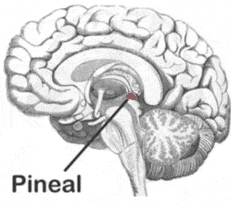
Up until the 1990s, no research had ever been conducted to determine the impact of fluoride on the pineal gland – a small gland located between the two hemispheres of the brain that regulates the production of the hormone melatonin. Melatonin is a hormone that helps regulate the onset of puberty and helps protect the body from cell damage caused by free radicals.Other than regulating vital hormones, the pineal gland is known to serve an esoteric function. It is known by mystic groups as the “third eye” and has been considered by many cultures to be part of the brain responsible for spiritual enlightenment and the “link to the divine”. Is enlightenment out of bounds for the modern man?
It is now known – thanks to the meticulous research of Dr. Jennifer Luke from the University of Surrey in England – that the pineal gland is the primary target of fluoride accumulation within the body.
The soft tissue of the adult pineal gland contains more fluoride than any other soft tissue in the body – a level of fluoride (~300 ppm) capable of inhibiting enzymes.
The pineal gland also contains hard tissue (hyroxyapatite crystals), and this hard tissue accumulates more fluoride (up to 21,000 ppm) than any other hard tissue in the body (e.g. teeth and bone).
- Source
“In the human brain there is a tiny gland called the pineal body, which is the sacred eye of the ancients, and corresponds to the third eye of the Cyclops. Little is known concerning the function of the pineal body, which Descartes suggested (more wisely than he knew) might be the abode of the spirit of man.”
– Manly P. Hall, The Secret Teachings of All Ages
September 13, 2011
Pesticides Directly Correlated With Increased ADHD Cases in Children
Source:PreventDisease.com
Levels of pesticides commonly encountered across the country in food as well as around the home are significantly increasing children's risk of developing attention deficit hyperactivity disorder (ADHD), and could be causing an increase in the number of children living with the condition, according to new research published in the journal Pediatrics.
Organophosphates form the basis for many pesticides and herbicides, and they’re also used as solvents and plasticizers. They work by irreversibly inactivating an enzyme called acetylcholinesterase, which is essential to nerve function in humans, insects, and animals. While organophosphates replaced an earlier class of compounds called organochlorides (including DDT) because they degrade more quickly, they have a far higher level of toxicity.
An earlier study reported in Environmental Health Perspectives focused on the impact of in-utero exposure to organophosphate pesticides among more than 300 Mexican-American children in the agricultural Salinas Valley in California. The children were checked at age three-and-a-half, and then again at age five. Researchers measured the quantities of breakdown products from these pesticides in the mothers’ urine twice during pregnancy. Then they looked at the children to see if there was evidence of ADHD symptoms. They found that the children whose mothers had higher levels of pesticide products during pregnancy were much more likely to exhibit ADHD symptoms by age five, and this was especially true for boys.
"It's mainly exposure through food. Diet is the driver," says pediatrician and public health expert Phil Landrigan, MD, professor and chair of the department of community and preventive medicine at Mount Sinai School of Medicine in New York City. "For most people, diet is the predominant source. It's been shown that people who switch to an organic diet knock down the levels of pesticide by-products in their urine by 85 to 90 percent."
Canadian researchers used data collected from nearly 1,140 children participating in the United States Centers for Disease Control and Prevention's National Health and Nutrition Examination Survey, including pesticide by-products found in urine. They found that in that group, 119 children met the criteria for ADHD.
Children with substantially higher levels of a breakdown product of neurotoxic organophosphate pesticides were twice as likely to be diagnosed with ADHD. The university researchers conclude that parents should buy organic for their kids. Numerous other researchers stress the importance of women eating organic at least six months before conception and throughout pregnancy, too.
This isn't the first study that has linked this class of pesticides to human health problems. However, other studies looked at farmers or others who work closely with pesticides day in and day out. This study is the first to look at everyday exposure levels in children from around the country. And as it turns out, U.S. kids are exposed to harmful levels of pesticides in their food, day in and day out.
This study looked at organophosphates in particular, ones designed to attack the neurological systems of pests (unfortunately, they harm humans, too). There are about 40 organophosphate pesticides registered with the U.S. Environmental Protection Agency (EPA), and most people's exposure to them comes through food, drinking water, and residential pesticide use, according to the EPA.
The harmful chemicals are widespread: A 2008 U.S. Pesticide Residue Program Report found detectable concentrations of one organophosphate alone, malathion, in 28 percent of frozen blueberries, 25 percent of strawberries, and 19 percent of celery sampled. (Malathion is also commonly sprayed out of airplanes and onto communities as part of mosquito-control programs. Organophosphate pesticides, also found in some flea and tick products, have been tied to childhood leukemia, and are believed to be partially responsible for colony collapse disorder, which is killing off honeybees (who pollinate our food crops) at unprecedented rates.
How to protect yourself, and your family:
• Eat whole organic. Environmental Working Group's "Dirty Dozen" list names the produce varieties contaminated with the most different pesticides. It's best to buy those fruits and vegetables organic whenever possible. However, other produce and grains also contain harmful pesticides of them, too. In fact, processed foods may contain higher pesticide levels because two common ingredients—genetically engineered corn and soy—have been genetically manipulated to withstand higher pesticide sprayings (which, as it turns out, isn't working, and is actually causing superweeds). Use our tips to save money when buying organic.
• Beware of other exposures. Pesticides, by nature, are designed to kill, and the ones homeowners used around the house are dangerous, too, Dr. Landrigan explains. Instead of spraying your lawn or home, use organic gardening methods and practice nontoxic bug control.
Subscribe to:
Posts (Atom)