Showing posts with label US. Congress. Show all posts

January 30, 2013

A Step in the Right Direction: Obama’s Gun Control Proposals Get Support From the Vatican.

*Source: The Blaze


Step in a Right Direction: Obamas Gun Control Proposals Get Support From the Vatican

VATICAN CITY (AP) — The Vatican praised President Barack Obama’s proposals for curbing gun violence, saying they are a “step in the right direction.”

The Vatican’s chief spokesman the Rev. Federico Lombardi, said Saturday that 47 religious leaders have appealed to members of the U.S. Congress “to limit firearms that are making society pay an unacceptable price in terms of massacres and senseless deaths.”

“I am with them,” Lombardi said, in an editorial carried on Vatican Radio, lining up the Vatican’s moral support in favor of firearm limits.

`’The initiatives announced by the American administration for limiting and controlling the spread and use of weapons are certainly a step in the right direction,” Lombardi said.

Obama is trying to rally support for reinstating a ban on assault weapons and requiring background checks on all gun sales. He faces stiff opposition in the U.S. Congress and from powerful gun lobbies.

Considering that Americans possess `’about 300 million firearms,” Lombardi said, `’people cannot fool themselves that it is enough to limit the number and use (of guns) to impede in the future horrendous massacres like that of Newtown that shook the conscience of America and world, as well as that of children and adults. `’

He was referring to the Newtown, Connecticut, elementary school where 20 children and six adults were killed by a sole attacker last month.

`’But it would be worse to be satisfied with words” of condemnation alone, Lombardi said. And while massacres are `’carried out by unbalanced or hate-driven persons, there is no doubt that they are carried out with firearms,” the Vatican spokesman said.

Lombardi renewed Vatican appeals for disarmament and encouragement for measures to fight “the production, commerce and contraband of all types of arms,” an industry fueled by `’enormous economic and power interests.”

November 15, 2012

Congressman Ron Paul's Farewell Speech to Congress.

Congressman Paul's final speech on the House floor before leaving Congress.

September 19, 2012

Congress To Cut 9/11 First Responders' Benefits

*Source: RT

Reuters / Str Old

Only days after a national health care act was expanded to provide coverage to September 11 first responders that have been diagnosed with cancer in the wake of the terrorist attacks, the future of the federal plan is now up in the air.

When US President Barack Obama signed his name to the James Zadroga 9/11 Health and Compensation Act in early 2011, he authorized the government to assist with medical bills incurred by emergency workers who have developed problems in the years since the World Trade Center was destroyed in 2001. Under automatic budget cuts expected to start next year, though, the health care program could be drastically cut short and stripped of millions of dollars in funding.

Under current plans, the automatic sequestering expected to save the country $1.2 trillion over the next ten years will do so by significantly trimming funding from the Zadroga Act. Huffington Post reports that $38 million worth of aid could be cut from the program in 2013 alone, with as much as $300 million in assistance being lost altogether over the current planned lifespan of the program.

Zadroga, a NYPD officer that responded to the Twin Towers after the attack, passed away in 2006 from illnesses he is suspected to have picked up while working in the toxic ruble after 9/11. Roughly 20,000 gallons of jet fuel, 100,000 tons of organic debris and 100,000 gallons of heating and diesel oil were ignited on 9/11 after two airlines collided into both towers at the World Trade Center, NBC News reports.

On the anniversary of the attacks only one week ago, the government added around 50 different types of cancers to the list of diseases covered under the act that now bears Zadroga’s name, but the automatic budget cuts expected to occur next year are expected to drastically defund the program and leave survivors once more scrambling to pay for medical bills and routine cancer screenings, which would otherwise be covered under the bill.

"This is unacceptable," John Feal, a construction worker who lost half his foot at Ground Zero in the cleanup, tells Huffington Post. "This is just another slap in the face from Washington, D.C."

"Last week, Republicans and Democrats talked about remembering 9/11 and unity all across the nation, and all that patriotic stuff, and now we're getting this thrown on our lap,” he says.

"We just got cancer added, and we don't even know if we have enough money for cancer, and they want to take money away from us.”

Democratic Senator Kirsten Gillibrand, a state lawmaker for New York, voted against the sequester and now explains to HuffPo how Congress’ shortcut to pay the country’s bills is burdening Americans who have long been victimized.

"Nothing exemplifies this unbalanced and draconian approach to deficit reduction more than asking our heroes who have already sacrificed so much to sacrifice yet again so that Republican leadership could appease their special interests. Our 9/11 heroes who answered the call of duty should be treated with the same dignity as our veterans. We need to come together and work towards a balanced approach that keeps struggling families from sacrificing the most,” she says.


September 3, 2012

Audit of the Federal Reserve Reveals $16 Trillion in Secret Bailouts.

*Source: Signs Of The Times

The first ever GAO (Government Accountability Office) audit of the Federal Reserve was carried out in the past few months due to the Ron Paul, Alan Grayson Amendment to the Dodd-Frank bill, which passed last year. Jim DeMint, a Republican Senator, and Bernie Sanders, an independent Senator, led the charge for a Federal Reserve audit in the Senate, but watered down the original language of the house bill(HR1207), so that a complete audit would not be carried out.

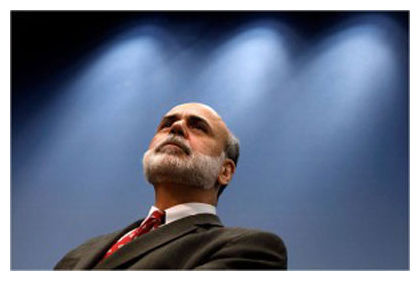
Bernanke
© The Silver Bear Cafe
Ben Bernanke (pictured to the right), Alan Greenspan, and various other bankers vehemently opposed the audit and lied to Congress about the effects an audit would have on markets. Nevertheless, the results of the first audit in the Federal Reserve's nearly 100 year history were posted on Senator Sander's webpage earlier this morning.

What was revealed in the audit was startling:

$16,000,000,000,000.00 had been secretly given out to US banks and corporations and foreign banks everywhere from France to Scotland. From the period between December 2007 and June 2010, the Federal Reserve had secretly bailed out many of the world's banks, corporations, and governments. The Federal Reserve likes to refer to these secret bailouts as an all-inclusive loan program, but virtually none of the money has been returned and it was loaned out at 0% interest. Why the Federal Reserve had never been public about this or even informed the United States Congress about the $16 trillion dollar bailout is obvious - the American public would have been outraged to find out that the Federal Reserve bailed out foreign banks while Americans were struggling to find jobs.

To place $16 trillion into perspective, remember that GDP of the United States is only $14.12 trillion. The entire national debt of the United States government spanning its 200+ year history is "only" $14.5 trillion. The budget that is being debated so heavily in Congress and the Senate is "only" $3.5 trillion. Take all of the outrage and debate over the $1.5 trillion deficit into consideration, and swallow this Red pill: There was no debate about whether $16,000,000,000,000 would be given to failing banks and failing corporations around the world.

In late 2008, the TARP Bailout bill was passed and loans of $800 billion were given to failing banks and companies. That was a blatant lie considering the fact that Goldman Sachs alone received 814 billion dollars. As is turns out, the Federal Reserve donated $2.5 trillion to Citigroup, while Morgan Stanley received $2.04 trillion. The Royal Bank of Scotland and Deutsche Bank, a German bank, split about a trillion and numerous other banks received hefty chunks of the $16 trillion.
"This is a clear case of socialism for the rich and rugged, you're-on-your-own individualism for everyone else."- Bernie Sanders (I-VT)
When you have conservative Republican stalwarts like Jim DeMint(R-SC) and Ron Paul(R-TX) as well as self identified Democratic socialists like Bernie Sanders all fighting against the Federal Reserve, you know that it is no longer an issue of Right versus Left. When you have every single member of the Republican Party in Congress and progressive Congressmen like Dennis Kucinich sponsoring a bill to audit the Federal Reserve, you realize that the Federal Reserve is an entity onto itself, which has no oversight and no accountability.

Americans should be swelled with anger and outrage at the abysmal state of affairs when an unelected group of bankers can create money out of thin air and give it out to megabanks and supercorporations like Halloween candy. If the Federal Reserve and the bankers who control it believe that they can continue to devalue the savings of Americans and continue to destroy the US economy, they will have to face the realization that their trillion dollar printing presses will eventually plunder the world economy.

The list of institutions that received the most money from the Federal Reserve can be found on page 131 of the GAO Audit and are as follows..
Citigroup: $2.5 trillion ($2,500,000,000,000)
Morgan Stanley: $2.04 trillion ($2,040,000,000,000)
Merrill Lynch: $1.949 trillion ($1,949,000,000,000)
Bank of America: $1.344 trillion ($1,344,000,000,000)
Barclays PLC (United Kingdom): $868 billion ($868,000,000,000)
Bear Sterns: $853 billion ($853,000,000,000)
Goldman Sachs: $814 billion ($814,000,000,000)
Royal Bank of Scotland (UK): $541 billion ($541,000,000,000)
JP Morgan Chase: $391 billion ($391,000,000,000)
Deutsche Bank (Germany): $354 billion ($354,000,000,000)
UBS (Switzerland): $287 billion ($287,000,000,000)
Credit Suisse (Switzerland): $262 billion ($262,000,000,000)
Lehman Brothers: $183 billion ($183,000,000,000)
Bank of Scotland (United Kingdom): $181 billion ($181,000,000,000)
BNP Paribas (France): $175 billion ($175,000,000,000)
and many many more including banks in Belgium of all places
View the 266-page GAO audit of the Federal Reserve (July 21st, 2011):

Sources:
US Government Accountability Office (GAO)
FULL PDF on GAO server.
Senator Sander's Article

August 29, 2012

Henry Paulson Confronted on Threatening Congress With Martial Law.

Matt and Luke Rudkowski of WeAreChange try yet again, on two separate occasion's, to question former U.S Treasury Secretary Henry Paulson about the banker bailouts. Watch what happens as the secret service and private security guards go out of their way to make sure no question is uttered to Mr. Paulson. Of course, this never stops WeAreChange and leads to interesting encounters on both occasions.


*http://www.wearechange.org
*http://www.youtube.com/wearechange
*http://www.ustream.tv/wearechange
*https://www.facebook.com/WeAreChange.org
*https://www.facebook.com/LukeWeAreChange
*http://twitter.com/#!/lukewearechange

*Become a WeAreChange Sponsor and get exclusive behind the scenes content while helping us grow! http:///www.wearechange.org/donate

August 19, 2012

Confirmed: US Government Spies On Federal Staffers

*Source: RT

“Who would have thought that they would have the nerve to be monitoring my communications to Congress?”

“Who would have thought that they would have the nerve to be monitoring my communications to Congress?”


Several federal agencies have purchased an advanced software application that allows administrators to see every single action, item, mouse click and more performed on their employees’ computers. Some say it’s being implemented to end whistleblowing.

In the midst of a witch-hunt that has targeted anyone accused of leaking documents, the US federal government has been linked to a massive acquisition of spyware that allows the higher ups to get ahold of essentially any communiqué and comment made by its employees on any electronic device. Some agents with the Food and Drug Administration insist that their personal conversations were unlawfully monitored by their higher-ups using the program, citing their superiors’ fears that whistleblowers will continue to come to lawmakers to voice concern over dangerous practices within the FDA.

“We are looking for what we call indicators of compromise,” Joy Miller, deputy assistant secretary for security at the Department of Health and Human Services, the FDA’s parent agency, says to the Washington Post. “We’re monitoring a system, not everybody in that environment.”

Journalists with the Post penned an article this week that examines the use of Spector 360, monitoring software made by the SpectorSoft group, within the FDA and other agencies.

According to the FDA, staffers had their computer activity monitored and logged over concern that employees were disclosing trade secrets. Those agents, however, argue that they were spied on to ensure that they were not reporting internal corruption to Congress. And while the Post’s expose examines the government’s attempts to chill any employee’s attempt at blowing the whistle on wrongdoing, it only begins to open up what great lengths the feds are willing to go to.

In January, six FDA scientists filed a lawsuit against the agency in US District Court over claims that they were unlawfully spied on after approaching Congress with their concerns that their office was allowing the approval of medical devices that posed a risk to the public. When the Post reported on those claims at the time, they unearthed emails dating back to early 2009 that showed that the FDA had intercepted emails between agency whistleblowers and congressional staffers.

“Who would have thought that they would have the nerve to be monitoring my communications to Congress?” Robert C. Smith, one of the plaintiffs, told the Post at the time.

Seven months later, not only are federal employees being still subjected to constant monitoring, but some have suggested that the surveillance surpasses what the government is allowed to do by the books. One expert tells the paper that any device used to access encrypted government data is then considered fair-game for any surveillance software.

“The general policy right now is if a personal device accesses any agency information, it adopts the profile of a government-issued device,” Tom Clare, senior director of product marketing for Websense, tells the Post. “They’re going to monitor everything.”

And it isn’t just everything, but everywhere, too, apparently. In an investigation carried out earlier this month by the National law Journal, the paper writes, “Government-contract records show that the U.S. Department of Veterans Affairs (V.A.) purchased spy software from the same company that supplied the FDA’s computer monitoring program, according to the database USAspending.gov.”

The Drug Enforcement Administration has also been tied to the software, an accusation confirmed by spokeswoman Dawn Dearden to the National Law Journal. On her part, though, Dearden pleads that the DEA “is aware of protections afforded to whistleblowers and does not monitor or check for that kind of activity.”

Despite this claim, some say that this monitoring could chill even thoughts of blowing the whistle.

“The actions of agency management have negatively impacted employee morale and resulted in significant concerns about agency management practices,” Colleen Kelley, president of the National Treasury Employees Union, tells the Journal. “For example, in light of what has happened at FDA, some employees voiced to [the union] their reluctance to report wrongdoing, for fear of retaliation.”

Transportation Security Administration Spokesman David Castelveter adds to the Post that the use of such software within that agency isn’t part of a war on whistleblowing, but instead is “about protecting the sensitive nature of the transportation security mission.” When certain information is kept under wraps to avoid being brought to the public, though — as with the lawsuit against the FDA — sensitive information is sometimes needed to be introduced outside of the agency for the sake of safety.

The Post reports that Spector 360 has been sold to at least one dozen federal agencies. In a request for solicitations posted by the Department of Homeland Security’s TSA in July, the government goes about explaining exactly what they look for in such software.

“The scope of this procurement is an enterprise insider threat software package,” the solicitation reads. “In order to detect an insider threat, technology is required to monitor and obtain visibility into users' actions. TSA Focused Operations requires a tool that can monitor user activities at the user host level.”

Included in the government’s requirements for responses is the ability for the software to look at and log keystrokes, chats, email correspondence, website activity and file transferring, as well as the capacity to capture a screenshot of any activity occurring on a computer monitor at any time. It also mandates that the end user “must not have the ability to detect this technology,” nor the ability to terminating the monitoring on their own.

According to a press release published in June, SpectorSoft has provided services to more than 160,000 businesses, government organizations, schools and law enforcement agencies. In a case study included on the SpectorSoft.com website, KBSolutions, Inc. President Jim Tanner claims, “To date, no offender has successfully attacked Spector Pro or defeated it.”


May 23, 2012

US Drone Industry: Open For Business At Home And Abroad.

*Source: RT

US Air Force Global Hawk unmanned aerial vehicle hanger during a preview day of the Seoul International Aerospace and Defense Exhibition at a military air base in Seongnam, south of Seoul (AFP Photo / Jung Yeon-Je)

US Air Force Global Hawk unmanned aerial vehicle hanger during a preview day of the Seoul International Aerospace and Defense Exhibition at a military air base in Seongnam, south of Seoul (AFP Photo / Jung Yeon-Je)


The Obama administration has continued in its enduring drive to sell drones to eager allies like Turkey. But if US clients are careless or misuse the weapons, Washington will share the blame, says Tim Brown, a senior fellow at Globalsecurity.org.

After speaking with President Obama on the sidelines of the NATO Summit in Chicago this past Monday, Turkish President Abdullah Gul mentioned the White House’s “positive stance” over the sale of unmanned aerial vehicles (UAVs), the state-run Anadolu Agency quotes him as saying.

“They are trying to convince the Congress,” he added.

Ankara has long been eager to get its hands on armed drones to help squash autonomy-seeking Kurdish rebels in the country’s southeast.

But the influence of pro-Israel lobbyists on the US Congress could scuttle any such deal. Relations between Ankara and Tel Aviv plummeted following a 2010 Israeli commando raid on a Turkish ship carrying civilian activists and aid to Gaza Strip.

A failed Turkish airstrike that killed 34 smugglers misidentified as Kurdish rebels is also likely to stymie the sale for some time.

While Turkey eagerly awaits a decision, drone export advocates say a policy of refusing to sell the unmanned vehicles will only deprive the flagging US economy of sales and jobs. And those pushing for greater leniency in international drone sales have a powerful backer.

Apart from Turkey, President Obama has long been pressuring US lawmakers to authorize the sale of presumably armed drones to NATO allies in order to redistribute the burden of America’s global military operations, both past and present.

Advocates of the president's position claim that by empowering NATO allies with drone technology, alliance members would no longer need to rely on United States drone capabilities in counter-terrorism and reconnaissance operations.

With fears that countries like China and Iran are attempting to get in on the drone market – with Iran managing to reverse-engineer a captured US spy drone last month – pro-export enthusiasts are likely to feel their case has been bolstered.

The economics of unmanned flight

Even if Washington isn’t directly selling drones to foreign governments via Foreign Military Sales, one way or another, drone technology is already being exported.

On Monday, the US embassy-based Office of Security and Cooperation in Iraq (OSCI) announced “Iraq's Navy has purchased U.S. drones to protect the country's oil platforms in the south, from where most of Iraq's oil is shipped."

However, the OSCI was not forthcoming about the number or type of UAVs provided to Baghdad.

Several companies have in fact already been granted the right to sell drone-related equipment by the State Department, including L-3 Communications, Dream Hammer, and Broadcast Microwave systems.

LEPTRON has even been given permission to sell drone helicopters.

But Texas-based defense contractor Vanguard Defense Industries is paving the way for future trends, as it has been granted the right to sell drones to foreign governments for narco-trafficking and counter-terrorism operations, the American Independent reported earlier this month.

Despite an expected 25 per cent bump in domestic sales from $35 to $40 million for next year, Vanguard’s CEO Michael Buscher says the future is abroad.

“I don’t see the domestic market as being such a boom,” said Buscher. “Our bread and butter is still going to be overseas foreign military sales,” the daily quotes him as saying.

Buscher’s optimism is not surprising.

Last month, the US-based marketing firm Teal Group estimated that “UAV spending will almost double over the next decade from current worldwide UAV expenditures of $6.6 billion annually to $11.4 billion, totaling just over $89 billion in the next ten years.”

The Teal Group study further predicted the US will account for 62 per cent of the worldwide RDT&E (Research, Development, Test & Evaluation) and 55 per cent of procurements over the next decade.

Domestically, a congressional budget office study published last June showed a planned Pentagon outlay of $40 billion to purchase more than 700 large and medium-sized drones in the coming decade.

It should come as no surprise, then, that the United States Air Force trained more drone pilots than fighter and bomber pilots combined in 2011, NPR reported last November.

Congress remains unsure

Despite the purported economic benefits, Senate Intelligence Chairman Dianne Feinstein expressed her reservations about disseminating drone technology to foreign states last December.

"There are some military technologies that I believe should not be shared with other countries, regardless of how close our partnership," the Wall Street Journal cites her as saying.

"The United States should be trying to control the proliferation of certain weapons, and I would put armed UAVs in that category."

At the time, a proposal to equip six unarmed Italian-owned Reaper drones with $393 million in weapons systems was log-jammed after being informally presented to US legislators.

But with the Association of Unmanned Vehicle Systems International spending some $280,000 lobbying Congress in 2011, lawmakers might become amenable to helping out the one US industry that appears to be crisis-proof:arms.

­

‘US bipolar on selling Terminator-type technologies’

Tim Brown, a senior fellow at Globalsecurity.org, believes America’s position on exporting drone technology is somewhat ambivalent.

“The US government has a bipolar attitude toward exporting UAV technology,” he told RT. “On the one hand there is a concern with how a weapon system is used once it is exported. The more sensitive the technology, the fewer countries the US will share it with.”

Brown says that while drone technology can be very effective in preventing the loss of soldiers’ lives and targeting terrorists, the US still has reservations about exporting the technology even to traditional allies, such as Turkey, which may use it to target Kurdish rebels.

“The concern is that Turkey will use US-built UCAVs to go after the PKK [the Kurdish Workers’ Party], and might not place a high enough priority on quality control in their targeting process,” he noted. “The number of innocent civilians killed might increase.”

Brown also stressed that the US Congress, the Department of Defense and the State Department will have to weigh the pros and cons of approving the export of the technologies to countries like Turkey.

“On the one hand the US would like to export UAV technology to support the US economy, sustain and create US jobs,” he said. “But if allies are careless or misuse these weapons, the US will share in the blame.”

Brown also took note of the fact that the US was able to successfully test a fully autonomous drone, without a pilot behind a computer controlling it with a joystick. He believes this may be the future of military technologies, the development of which is increasingly weeding out the human element.

“We are not quite there yet, but the era of 'Terminator' type UCAVs flying around autonomously, using programming and fuzzy logic to target enemies on the battlefield is probably not far off,” he noted. “The F-22 and the F-35, if built, will probably be the last manned fighter to go into production in the United States. The proliferation of this new weapon system may or may not have a positive effect overall.”